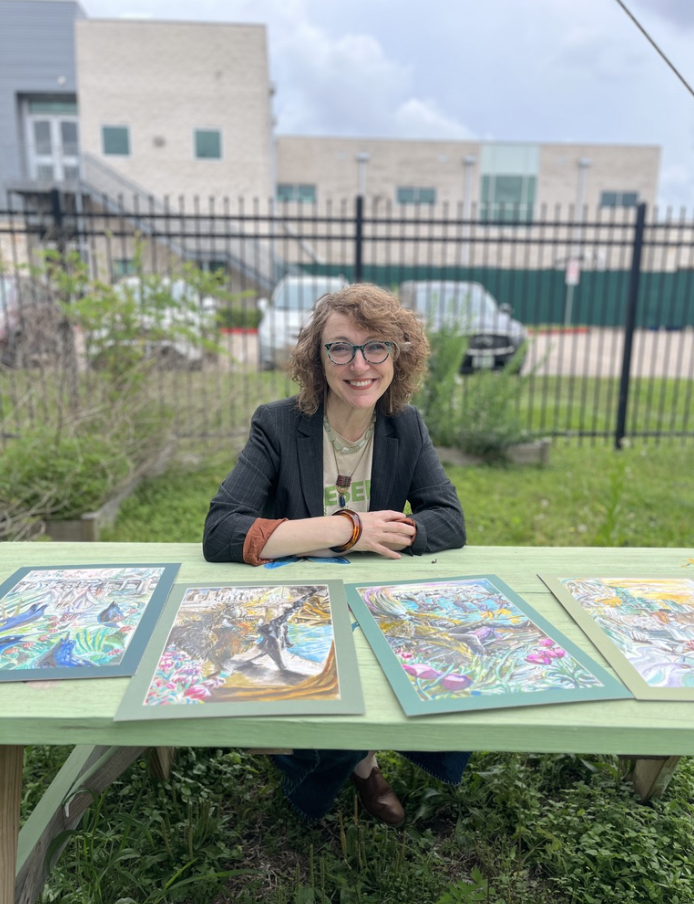
Pages flipping, pencils scratching, the air is tense with thought. Then the silence is broken by an exclamation of realization. As if a lightbulb has switched on, all students look up, eyes wide and shoulders forward, ready to hear what their peers have noticed. Everyone utters a consensus of “oohs” and “hmms” as the cast alternates between listening and frantically scratching down notes, filling the space with a hum of excitement. The sunlight coming through the window becomes a glittering spotlight as students shift with ease into the poised, complex characters of 100 years past that they have spent months developing. In an instant, these actors, led by Emery theater director Jennifer Bauer-Conley, transform the small Steiner Board Room into the larger-than-life, gilded world of “The Great Gatsby.”
“The Great Gatsby” has been taught in schools for decades across the country. High school English teacher Brody Lipton, a teacher of the book for 18 years, similarly notes that “The Great Gatsby” is applicable no matter the time, even 100 years later.
“The way I taught it in 2010 is the way I teach it in 2025. It is eternal.”
But the anniversary is still significant, especially when choosing the shows for this year. Bauer-Conley remarks that this “exciting milestone of a year” for “The Great Gatsby” was part of the reason she selected it for the season. However, another pressing factor of the anniversary played into her decision: the themes of the book are still paralleled in modern day.
“For every show, our question is why this show, why now?” Bauer-Conley reveals when thinking about the cast’s process of addressing the themes of the show. “So many of the things the characters in this story are facing and grappling with are still things we are living with today. Things we either have continued to struggle with for the last 100 years or things that are resurfacing in recent years that we are having to face again.” The cast and crew focused on topics such as class disparity, gender roles and expression, and sexuality amongst many others in order to deliver their message, connecting the past to modern day.
This production of “The Great Gatsby” is special and not just because it is a centennial piece. For the first time ever at Emery, students wrote the adaptation for the show.
“The cast and the stage management are one of the most thoughtful, intellectual, fascinating, complicated groups that I’ve ever had the chance to work with at Emery,” smiles Bauer-Conley while the work of said crew clangs in the background. “The fact that this is the first time a student group has written an adaptation here is a huge feat!”
Very few people live to see a century pass. However, this book managed to do more than just exist for 100 years; it remained incredibly popular and taught in a society with prevalent censorship. So why did F. Scott Fitzgerald create a novel that condemns the American Dream and the whole class system? This question came up often during the extensive table read and adaptation process the cast and crew of the play underwent up until a week before opening night. When approached with the difficult question, Bauer-Conley shares her logic when considering how the cast processed the prompt.
“The truth is, we don’t know.” Bauer-Conley laughs. “But the fact that he was writing this is indicative of a deeply hopeful view of America. I think to have written this at all, to have written it from a place of being willing to point out the things about something you love that are not working, with the hope of making them better, is an indicator of love for something. This book and others are here as a cautionary tale for us not to repeat the mistakes of the past”
Ultimately, no one can know what Fitzgerald thought when writing what is now considered the epitome of 20th-century American literature. So, all one can do is create with the intention that people leave with questions to engage with, a process that the cast of “The Great Gatsby” went through for almost three months in order to craft the ideal message they want to impart.
“I think one of the things we are hoping with this piece is that we [Emery] are thinking about our place in the world how we can be making our community a place that is more equitable for everybody…and encourages people to be their whole selves and doesn’t ask people to perform some version of themselves,” Bauer-Conley states. “I think it’s still our charge a hundred years later to hold that mirror up to ourselves and say, have we created any version of an American dream, and if so, for whom.” If anything, the play’s team hopes that the audience will take their piece with them out of the Black Box and into their lives.
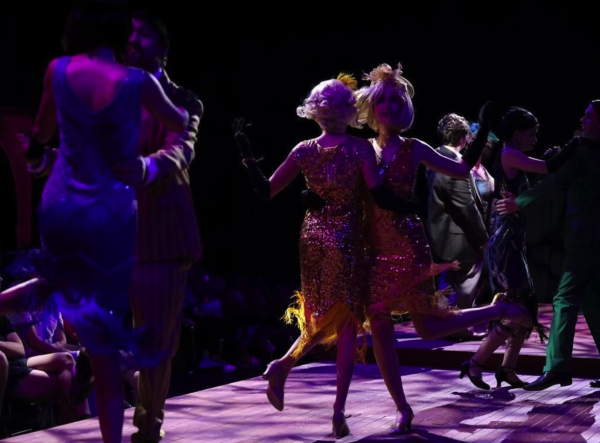
Playbills flipping, feet shuffling, chairs squeaking, the air in the small theater feels ripe with the anticipation of art that will wrap the audience in the hectic, complicated atmosphere of 100 years past. The lights dim, the music expertly fades out, and then everything silences. Barely a breath is heard in the Blackbox as “Thank you” sounds over the speakers and the cast enters the stage. Their costumes shine with the glitz of the Roaring 20s among the Art Deco stage that hides many surprises to come while their feet move along with the tinny party music that lured so many Americans into the dream a century prior. Today, the audience leans forward into the story, the mirror and message as modern 2025 falls away into historic 1925.