In high school, friendships are notoriously difficult. Hallways and cafeterias are packed with status quo, cliques, trends, and unspoken social rules. Often, true friendships can seem unachievable. Yet Jon M. Chu’s two-part “Wicked” series teaches that sometimes friendships don’t have to be perfect to be good. It can be the hardest friendships that are truly the most valuable.
Last November, Chu’s first “Wicked” movie hit the theaters with an extensive runtime of 2 hours and 40 minutes. The movie only made up the first act of the movie’s source material, ending on the musical’s most recognizable tune “Defying Gravity.” After its release, fans were left to wait patiently in anticipation for the second act and final film.
The first film ends with the splintered friendship and parting of Glinda and Elphaba. Following the traditional enemies-to-friends trope, Glinda and Elphaba, utterly different, find themselves rooming together upon a last-minute switch at Shiz University. While Elphaba is independent, isolated, strong-willed, and unashamed to be herself, Glinda relies on validation from others, maintains a “popular” status, is consumed by her looks, and suffers deeply from main character syndrome.
On paper, they should not be friends. Yet throughout the first movie, they slowly bridge the gap separating them, realizing that their differences need not define their relationship.
Though in the movie’s climactic moment, they are pulled apart again. Elphaba is driven by her morality, Glinda by her need to protect her appearance. Together, they sing, “Though I can’t imagine how, I hope you’re happy right now.”
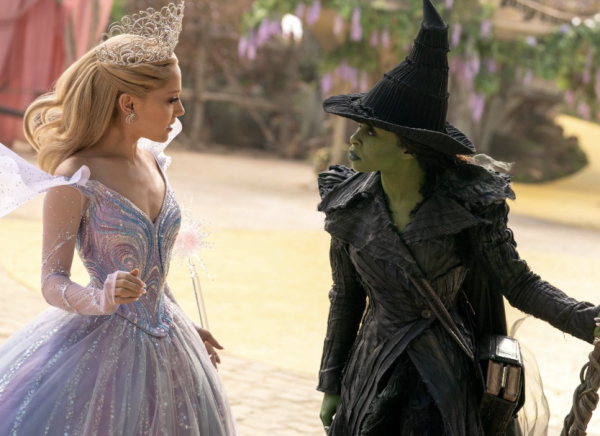
In Chu’s second film and the musical’s second act, Glinda and Elphaba continue to fight on opposite sides, constantly disagreeing with each other’s actions and wishing the other had chosen a different path. Though they both seek the betterment of Oz, neither agrees on how to achieve that future. Yet throughout it all and even in their most tense moments, there is an underlying fondness between the two. An instinctual need to protect the other arises. It is a true showcase of loyalty and love, even in the face of pure disagreement and differing morals.
The true display of friendship, though, occurs near the film’s end as the pair sing the beautifully bittersweet “For Good.” Throughout the film, Ariana Grande, Glinda, and Cynthia Erivo, Elphaba, rarely share the screen as their characters fight different battles, but in this final moment, face-to-face, the true message of friendship pours out.
“I’ve heard it said people come into our lives for a reason, bringing something we must learn. And we are led to those who help us most to grow, if we let them,” sings Grande. “Well I don’t know if I believe that’s true, but I believe I know who I am today because I knew you.”
Are you more ...
Sorry, there was an error loading this poll.
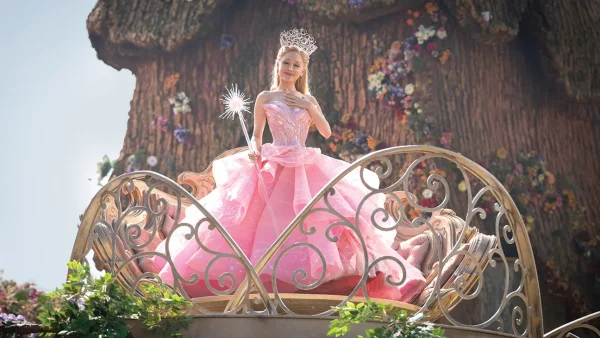
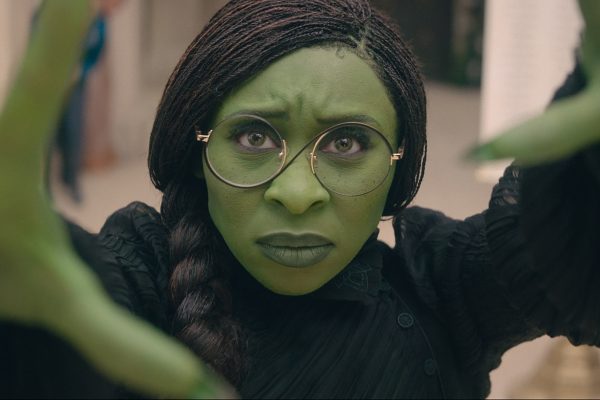
If friendship is viewed through the lens “Wicked” provides, it becomes something as messy as it is beautiful and as complex as it is deep. There is never a moment when Glinda and Elphaba are truly on the same page or believe the same thing, yet they still hold an immense amount of love and respect for each other. Neither one of them is perfectly right or entirely wrong; they just see the world differently. Through each other, they learn from what the other is best at.
If they were both perfect at the same things, as friends, they’d have the same deficits. They’d be the same half, rather than two different halves of one whole. But it is their differences that allow them to slot together and form something that makes up for what the other lacks, until each can become a whole on their own.
“Wicked” and “Wicked: For Good” are only as beautiful as they are because Elphaba and Glinda are so different yet equally willing to show up and care for each other despite it all. Their love for each other transcends their disagreement. And their friendship isn’t perfect by any means, but that does not mean it isn’t worthwhile.
In “For Good,” Elphaba sings, “I ask forgiveness for the things I’ve done you blame me for.”
Glinda responds, “But then, I guess we know there’s blame to share.”
Together, they sing, “And none of it seems to matter anymore.”
Glinda and Elphaba’s friendship is not defined by their conflicts or faults. Healthy friendships have conflict, share disagreements, and yet become stronger because of it.
Finally, they sing, “Because I knew you, I have been changed for good.”
In a world where social norms and expectations have become so complex and hard to follow, true friendships can seem impossible. Yet all friendship really needs to be is a relationship in which you care for each other, respect each other, and make each other better, regardless of what you each believe in or whether or not you agree on everything.
Clashing doesn’t mean something’s bad. It just means, sometimes, you have to try harder to be willing to hear the other side. After all, pink goes good with green, but only if you have a keen eye.