

For the first time since July 20, 1969, humanity returned to the moon. Four courageous astronauts, Americans Commander Reid Wiseman, Pilot Victor Glover, Mission Specialist Christina Koch, and Canadian Mission Specialist Jeremy Hansen, traveled to the dark side of the moon on April 1. Safely touching down in the Pacific Ocean on April 11 after covering approximately 695,000 miles, this journey aboard Artemis II marks a success not just for the National Aeronautics and Space Administration (NASA) and the Canadian Space Agency (CSN), but all of humanity and the global scientific community.
While the creation of Artemis II was primarily funded and spearheaded by NASA, the program received contributions from around the world. Contractors, including Boeing, Lockheed Martin, and Northrop Grumman, assembled and built the thousands of intricate parts needed to propel the shuttle at speeds exceeding 24,000 miles per hour, and many international space agencies provided essential knowledge and research needed for a successful mission.
After roughly six years of assembly and a culmination of decades of space-related research and exploration, the Artemis II shuttle appeared to be completed at the perfect time. With the release of the currently trending space science fiction movie, “Project Hail Mary,” and society needing a break from the seemingly endless cycle of violence and disagreements in trending headlines, Artemis II was the perfect example of a mission that united people across the globe.
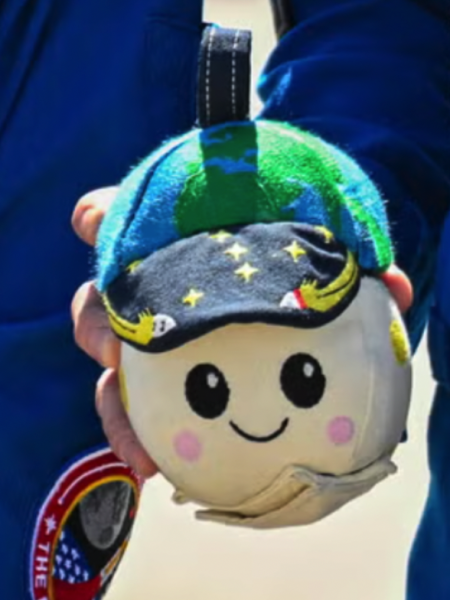
Aside from the mission being something humans had never done before (check out NASA’s and the crew’s detailed flight log for details: https://www.nasa.gov/blogs/missions/), the mission went viral for moments of laughter thousands of miles away. The crew’s zero-gravity indicator, a plushie named Rise, designed by 8-year-old American Lucas Ye, brought smiles to everyone’s faces as it made several appearances on social media. Jokes regarding the broken toilet aboard the shuttle were trending; humanity seemed to be glad this was the largest issue that occurred during the flight. NASA shared the crew’s wakeup playlist on its social media, and edits and trending videos continue to circulate across all platforms.
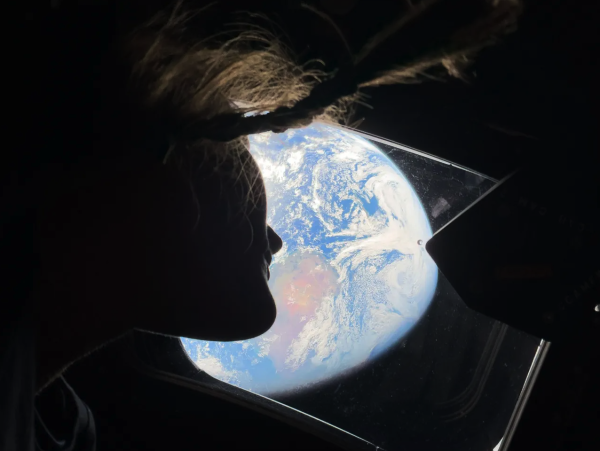
Official photos were distributed of the crew taking selfies with the moon and Earth, and millions tuned in to the live coverage of its landing.
Emery/Weiner senior Darcy Sabloff was one of these viewers. “It was inspiring to see how teamwork and great minds can bring together a successful project,” she reflected. Indeed, Sabloff’s sentiment captures society’s pride in the international collaboration behind Artemis II that will forever impact the future of space exploration.
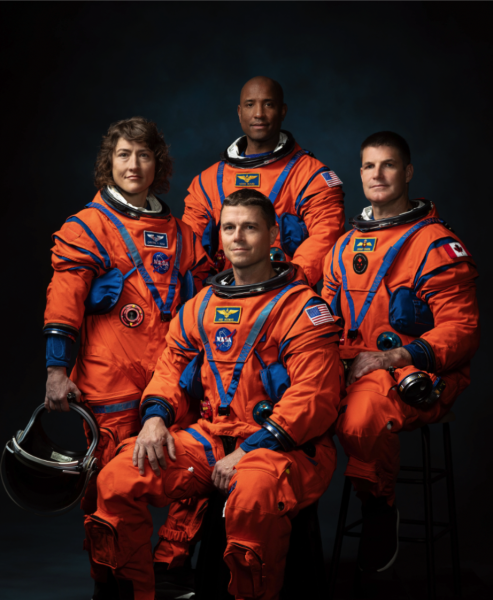
Wiseman: “There is nothing normal about this. Sending four humans 250,000 miles away is a Herculean effort, and we are now just realizing the gravity of that.”
Glover: “Trust us, you look amazing, you look beautiful…And from up here, you also look like one thing. Homo sapiens, all of us, no matter where you’re from or what you look like, we’re all one people.”
Koch: “We will explore. We will build. We will build ships. We will visit again. We will construct science outposts. We will drive rovers. We will do radio astronomy. We will found companies. We will bolster industry. We will inspire. But ultimately, we will always choose Earth. We will always choose each other.”
Hansen: “…we most importantly choose this moment to challenge this generation and the next to make sure this record is not long-lived.”