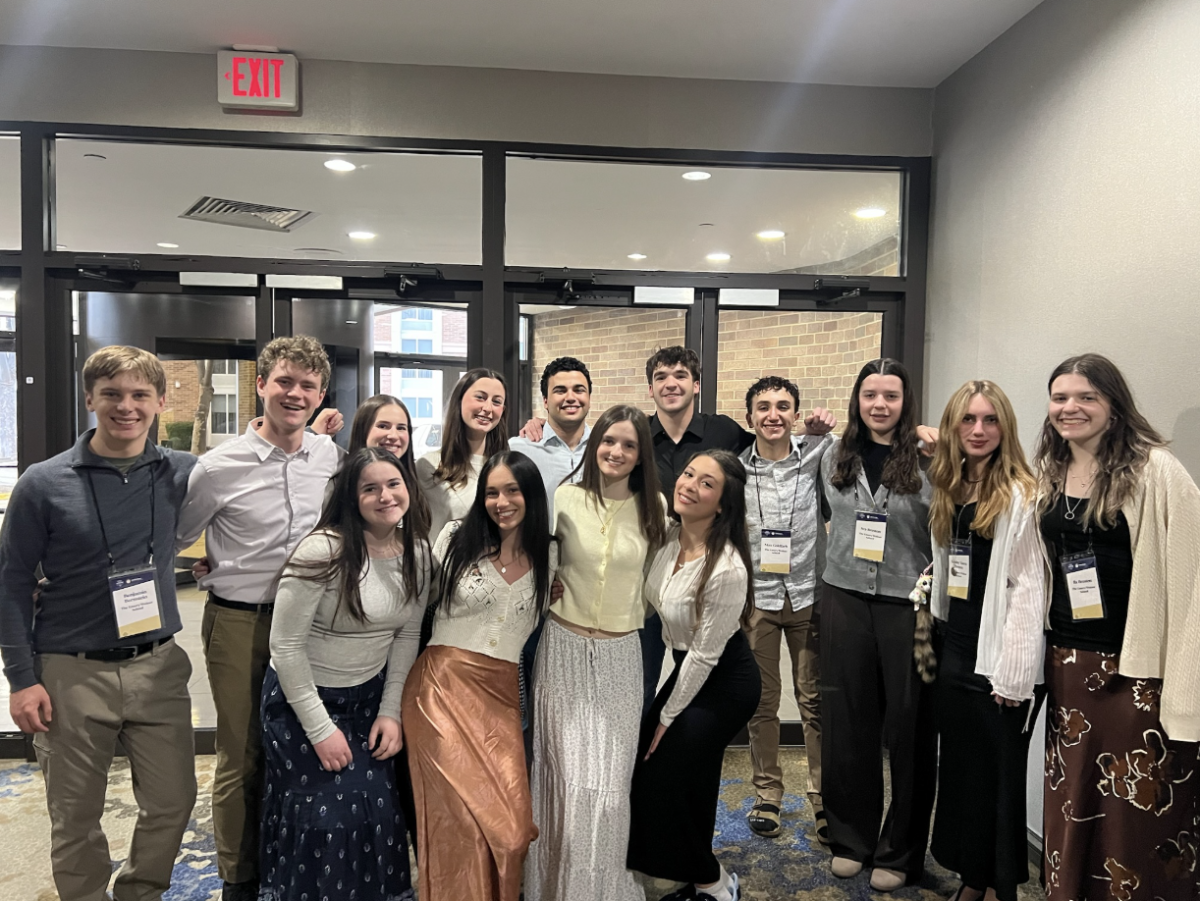
As a Jewish school, learning about other religions is integral to our pluralistic culture. For winter trips, our senior class set off on a journey visiting three remarkable Christian Churches — each belonging to a different branch of Christianity. This trip was very important, giving seniors a chance to witness how diverse Christian traditions are and to reflect on their similarities and differences to Judaism.
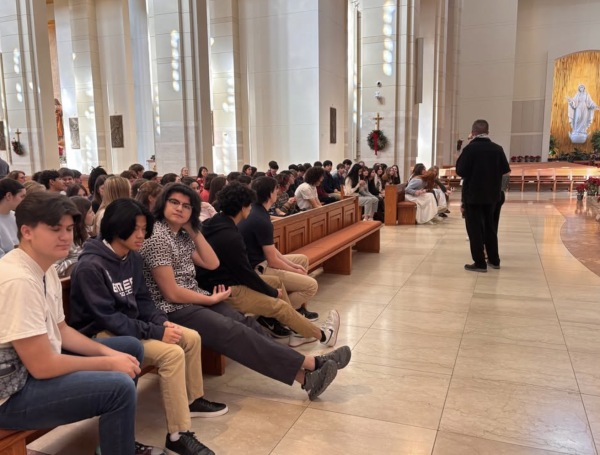
Our first stop was the Co-Cathedral of the Sacred Heart, one of the two central churches of the Roman Catholic Archdiocese of Galveston-Houston. The moment one enters Sacred Heart, the space commands attention. Soaring ceilings, polished marble, and stained glass that draw the eye create an atmosphere of reverence and awe. Catholicism, with roots stretching back nearly 2,000 years, places deep emphasis on ritual, sacred art, and the sacraments. While the theology differs from Judaism, the power of a sacred space felt familiar. Like a synagogue, the cathedral is designed to inspire reflection, humility, and a sense of connection to God.
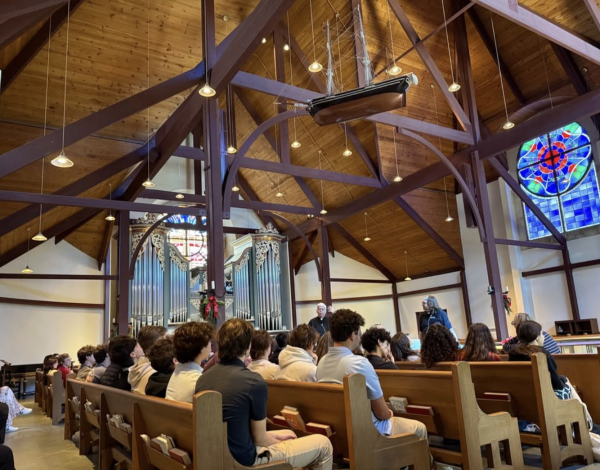
From there, we went to Christ the King Lutheran Church in Rice Village, part of the Evangelical Lutheran Church of America. Founded on the teachings of Martin Luther during the Protestant Reformation, Lutheranism emphasizes salvation through faith and God’s grace rather than through sacraments alone. The visit stood out for its warmth and interactivity. Pastors welcomed us into their place of worship, invited us to try on vestments, and explained the symbolism behind them. We also learned about the Lutheran Church’s progressive evolution over time, including its decision to ordain women as pastors beginning in the 1970s, a reflection of how religious traditions adapt alongside changing societal values. Importantly, the conversation did not shy away from difficult history. Martin Luther’s later writings included antisemitic views, a legacy that many Lutheran institutions today openly acknowledge and repudiate. Hearing how modern Lutheran communities work toward greater acceptance of Jews and interfaith respect added a layer of honesty and growth to our experience.
Our final stop was The Fountain of Praise, a large Baptist church known for its vibrant worship, strong emphasis on excellence, and extensive community outreach and involvement. Music always fills this church, not in the background, but as its central form of expression. Music plays an essential role in helping congregants connect emotionally and with teachings, a concept that resonates with Jewish tradition as well. Experiencing Catholic, Lutheran, and Baptist worship side by side revealed just how diverse Christianity is.
By the end of the day, what resonated with the senior class wasn’t any single church but rather the broader experience of witnessing religious diversity in action. Senior Bryce Sabloff shares that although it is interesting to learn about other religions and cultures in class, “going to the physical buildings is a lot more impactful.” Visiting three distinct Christian churches reminded us that faith isn’t monolithic, even within the same religion. Engaging with other religions and traditions is incredibly essential to our Jewish education here at Emery, a school that emphasizes pluralism and acceptance. Learning about other faiths and religions doesn’t erase our own identity; instead, it highlights it, helping us understand what connects us and what distinguishes us.